Drippings from the Honeycomb
More to be desired are [the rules of the Lord] than gold, even much fine gold; sweeter also than honey and drippings of the honeycomb. (Psalm 19:10)
|
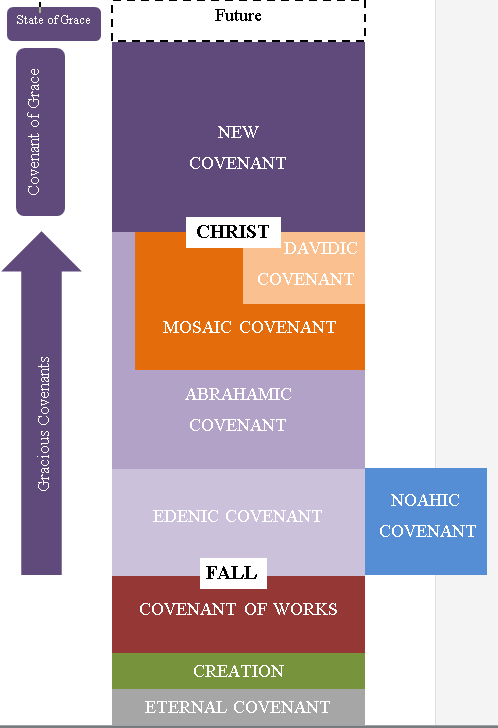
*Over 2023 we studied Acts and Galatians. At Christmas we studied Lk 1. Central to understanding the transition from the Old Covenant (Testament) to the New is the Biblical storyline of covenants.
8. NEW COVENANT: Christ fulfils the Old Covenants. He is the 2nd Adam, the offspring of woman and Abraham, the faithful Israelite and forever King. In the New Covenant we relate to God through Christ and enjoy all of His benefits. Read the full article below:
I was recently asked a question, the answer to which I thought would be helpful to share as we journey through C2C.
The question was this: “Can the principle of Matt 18:20 stand on its own outside of its context…[it seems to hold a more universal principle].” In other words, can we take verses that seem clear and use them out of their context? The answer is no and kind of… We need to remember that context is king. Three basic contexts are always helpful to ask when studying a verse, its literary, historical and theological contexts. Literary- how does this verse fit with the surrounding passage and book? Historical- What historical aspects in this verse or passage do I need to understand to see it correctly? Theological- How does this verse or passage fit into other wider passages on the same subject (i.e. what does the Bible say on the subject as a whole). CONTEXT, CONTEXT, CONTEXT. That context of Mt 18:20 is about life in the community of Christ, particularly what to do in cases of discipline. Christ has given the local church, in an official sense, the authority (v. 18, “bind”) to recognize who is a believer and who is not. This corporate witness and authority (itself harkening back to v.16) is affirmed by Jesus’ promise to be authoritatively and helpfully present in such circumstances. Knowing the context is of vital importance to rightfully reading a verse, but also to reading it in all its richness. There are verses that would be very dangerous to pluck out of their context. The classic is someone who opened their Bible, turned to Mt 27:5b (“Judas hung himself”) and then to Lk 10:37b (“go and do likewise”). We could flick open our Bibles and find a great many verses that we would mutilate the meaning of if we separated them from their context. Jer 29:11, “for I know the plans I have for your,” is a famous instance. It’s not meant to be a cushy verse just for anyone. In its context it is talking about Judah’s exile and is a call for the faithful to look to and hope in God during this difficult period in their history. It’s speaking specifically to believers, not saying there won’t be hardships, but that there is hope because of God’s plan of history. Once we’ve grasped the context, we can then apply the principle to situations the Christian may face today. That said, I would tend to agree with our initial question that even though there are some verses that must be contextually understood, there are some verses, at least the principle of which, that can clearly and more independently stand on its own, like Ro 12:9, “hate evil and cling to what is good” (though it is of course enriched by its context). The principle of Mt 18:20 is readily recognizable. It is one realized by say Christians imprisoned together by their faith, that when the proper number of witnesses to Christ come together Christ bears witness to them in a special way by presenting himself spiritually in a way that could not ordinarily be experienced by a lone believer (another good reasons for the corporate nature of the Church/body!). So context is king, even if there are some verses, that to a degree, might be better suited for their principle to stand alone. |
|||||
LocationPO Box 73,
144 Lorne Street, Markdale N0C 1H0 |
Join by zoom |
Contact us |
Donate |
|